Katy for Kansas
June 2, 2026 · Newsletter
Voting Rights and the Fierce Urgency of Now
Since launching my congressional campaign back in March, one thing has become increasingly clear to me: there are two kinds of people in politics right now. First, there is the “politics as usual crowd” — the people who continue to perform, play political games, and treat this moment like any other in modern American political history.
Then there are those who I call “the urgency of the moment crowd.” This group consists of folks who understand that our institutions, our democracy, and our basic civil rights are being tested in real time. I am decidedly in this second camp.
I am running for Congress in Kansas’ Fourth District because I believe this moment demands leaders who recognize the moral urgency of this moment and are rooted in service, integrity, accountability, and the courage to put people over party. We need that leadership now more than ever.
If you have ever wondered where you would have stood during the defining social movements of our history, look no further than the mirror and ask yourself: where are you standing now?
Since the U.S. Supreme Court issued its recent decision on the Voting Rights Act in Louisiana v. Callais, I’ve been thinking a lot about the late great civil rights icon Congressman John Lewis. His words still echo: “Democracy is not a state. It is an act.”
There is one story in particular that I often return to because I think it exemplifies exactly the kind of action Congressman Lewis was talking about.
In the early 1960s, John Lewis helped organize the Freedom Rides, an effort to challenge segregation on interstate bus lines. He was one of the original Freedom Riders who made their way into the Deep South. When they reached Birmingham, Alabama, violence broke out. Buses were burned. Protestors were brutalized. The Kennedy administration wanted the rides to stop, fearing more bloodshed.
Back in Nashville, John Lewis’ counterpart at the Student Nonviolent Coordinating Committee, a brave young organizer named Diane Nash, was not going to let that happen. Nash stepped forward to organize the next wave of riders in Tennessee. She was 22 years old.
The night before Nash and her group were to leave for Alabama, Attorney General Robert Kennedy’s DOJ official on the ground, John Seigenthaler, called Nash to warn of the violence that awaited her and her fellow riders down South. Their exact words are left to history but their exchange went something like this: Seigenthaler pleaded with Nash not to come: “Young lady, you don’t understand—if you come here, people are going to die!” To which, Diane Nash responded, without missing a beat: “With all due respect, sir — you don’t understand…we signed our wills last night.”
Lewis, Nash, and the other Freedom Riders understood they were putting their lives on the line. But they also understood that silence in the face of injustice was not an option.
Their courage helped pave the way for the Civil Rights Act of 1964 and the Voting Rights Act of 1965 — landmark achievements that many Americans of my generation grew up taking for granted. Think about it: many Americans of my parents’ generation bled and died for the simple right to vote. Yet today, we are literally witnessing the rollback of civil rights under the guise of “eliminating DEI” and the near complete erosion of the Voting Rights Act—and both are happening in broad daylight! The consequences are real.
In the Callais decision, the Supreme Court further enabled partisan gerrymandering while simultaneously restricting race-conscious remedies designed to protect minority voting power. In doing so, it fueled the perversion of the system and accelerated a dangerous race to the bottom when it comes to partisan gerrymandering. The result is a system that increasingly allows politicians to draw maps that protect their own power rather than ensure fair representation for the people they serve.
When elected officials choose their voters instead of voters choosing their representatives, we no longer have a functioning democracy. That’s where we are and it’s time we had leaders who told the truth about it.
History rarely announces itself while it is happening. But future generations will look back on this moment and ask whether we defended our democratic ideals when it mattered the most.
They will ask whether we sat on our hands while those in power took a wrecking ball to the hard-fought victories of the civil rights movement, or whether we held them to account for their egregious behavior and stood up and fought for the next generation.
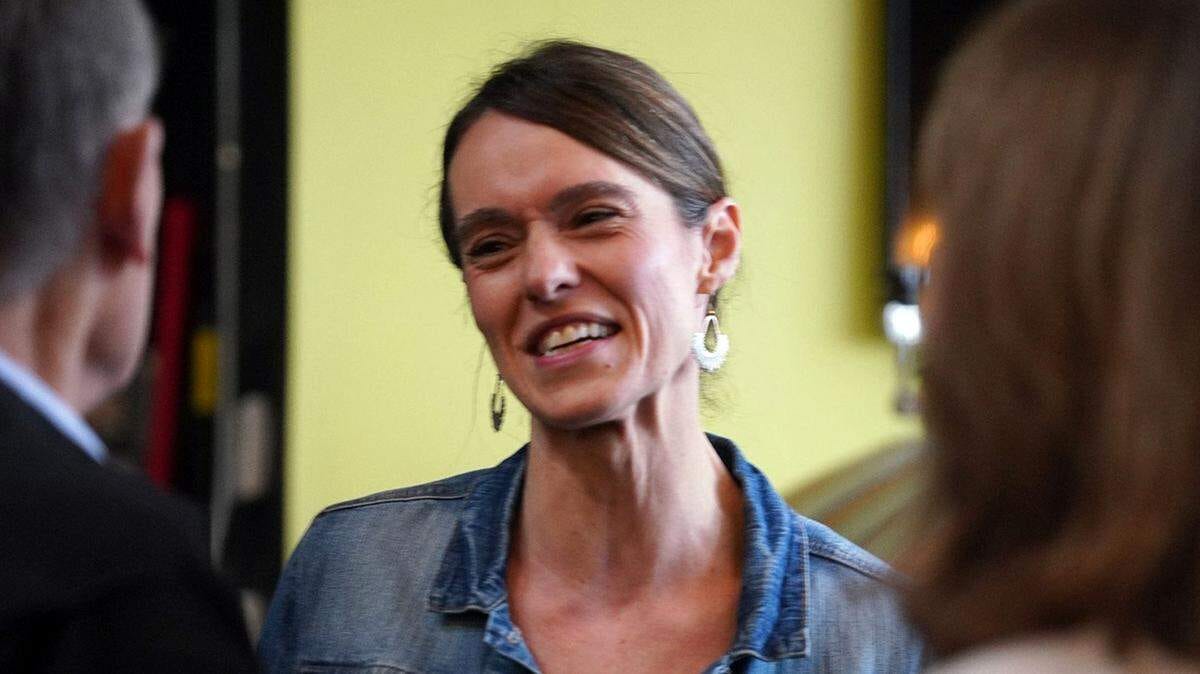
For me, this fight is personal. My children’s future representation is on the line. Their ability to fully participate in American democracy is on the line.
That is why, if I have the privilege of serving in Congress, one of my top priorities will be restoring voting protections, supporting independent redistricting commissions, and increasing access to the ballot by passing legislation akin to the John Lewis Voting Rights Advancement Act.
Because the right to vote is the foundation of every other right we claim to value in this country. And if we allow that foundation to crack for some Americans, eventually it will crack for all of us.
We don’t face state mandated segregation or firebombed buses. But we do face a President who thinks he’s above the law. We face lawmakers who are capitulating their constitutional responsibilities. We face threats to a free press and disinformation campaigns on a historic scale. We face the dangerous normalization of political violence and corruption. We face, as Martin Luther King Jr. put it “the fierce urgency of now.”
MLK Jr., John Lewis, Diane Nash, and their brethren understood something fundamental: democracy is never self-executing. Every generation must decide whether it is willing to defend it.
This is our generation’s test. It is not time to grow quiet. It is time, once again, to act.
The Truth Matters
I have a little hand-painted rose in my car that says, “Truth Matters.” It was given to me at one of the first demonstrations I attended in February 2025 to push back against the dismantling of USAID and other DOGE cuts. I keep it there because it’s my daily reminder that what we do in this moment matters. It sometimes takes time for history to get it right, but reality has a way of asserting itself. You can’t alter the truth, no matter how hard you try. The facts are the facts. The truth matters.
The need for truth and honesty from our leaders was one of the driving forces behind Leading Kansas, the nonpartisan civic engagement organization that I co-founded last year. It is the last of our four core tenets: defending freedoms, protecting institutions, securing Kansas, and championing truth.
Right now, amidst all the noise, distraction, and division online, it can be difficult to decipher what is really going on in our world. But the truth matters now more than ever because Americans are hurting. Kansans are hurting. And if we’re honest with ourselves, many of the challenges facing working families today are not improving nearly as quickly as we were promised.
The truth is this: prior to the 2024 election, we heard an awful lot from Republican lawmakers, including Rep. Ron Estes, about how they would fix the economy on day one after the election. We heard promises about lowering inflation, reducing healthcare costs, bringing down prices, and making life more affordable for everyday Americans.
But I have to ask: has that happened? Because from my vantage point, we're paying more in groceries, when we fill up the tank, when we pay our energy bill, and the list goes on. Too many families are still struggling to make ends meet. And that’s where truth matters.
Political campaigns are full of promises. Governing is measured by results. Voters deserve an honest accounting of whether promises made were promises kept and whether the policies being pursued today are actually making their lives better.
It's also important to remember that many of the most significant provisions in the so-called “One Big Beautiful Bill” are structured so that Americans won’t feel their full effects immediately. Some of the most consequential changes are delayed for years, conveniently pushing their impact beyond the 2026 midterm elections. Whether you support the legislation or oppose it, that should concern you. Because democracy depends on accountability. If lawmakers genuinely believe a policy will benefit the American people, they should be willing to defend its consequences today—not years from now. Voters deserve the opportunity to evaluate the real-world results of decisions being made in Washington before they return to the ballot box. Delaying difficult consequences until after an election may be politically advantageous, but it doesn’t make those consequences any less real.
Americans deserve honesty from their leaders. They deserve leaders who level with them about the costs and benefits of major policy decisions. They deserve transparency about who wins, who loses, and what tradeoffs are being made in their name. The truth matters.
That little rose sitting in my car reminds me of that every day. No administration, no political party, and no elected official is entitled to their own facts. Reality eventually catches up to all of us.
This op-ed was also published in the Sunflower, check out the full article here.