Katy for Kansas
August 15, 2026 · Newsletter
The Infrastructure Behind Our Health
Well folks, the last few weeks have been a whirlwind.
First, there was the primary election. And I still don’t quite have the words to adequately thank everyone who believed in this campaign and helped us win the Democratic nomination for the U.S. House of Representatives in Kansas’ Fourth District. We won with 66% of the vote, which I think is a testament to the fact that Kansans are ready for change and ready to come together around the belief that our politics can be about people again.
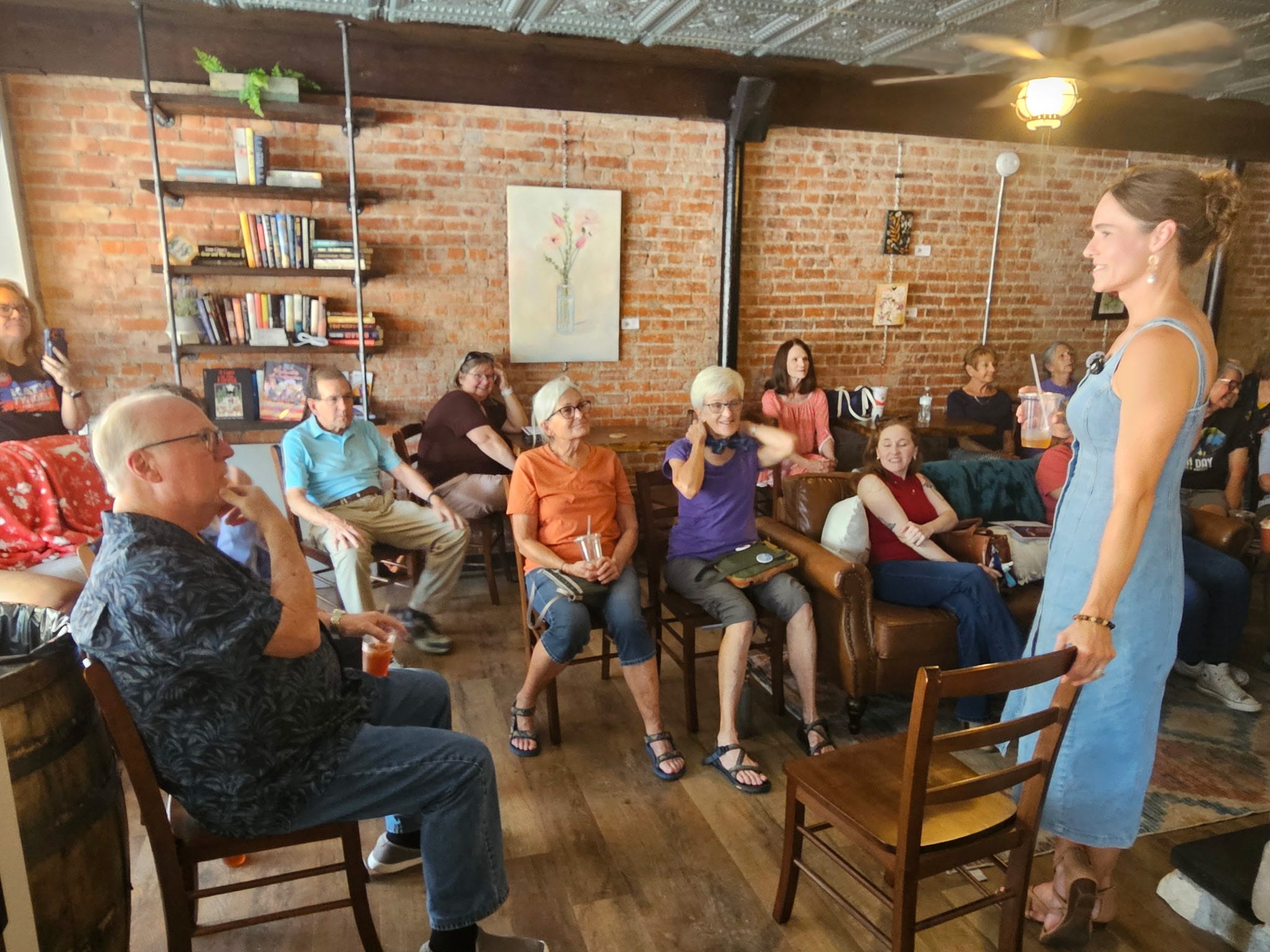
Now, we are on to the general election, and this week, I got back to doing what I love to do: showing up for the people. I kicked off my listening tour across the district, spending three full days traveling through Butler, Cowley, and Sumner Counties, sitting down with Kansans and hearing what’s on their minds. The one issue that keeps coming to the fore is this: Kansans are worried about their healthcare—and about whether the systems that are supposed to protect them will still be there when they need them.
People are worried about the cost of healthcare. They’re worried about whether they can afford their prescriptions. They’re worried about whether they can find a doctor. And in rural Kansas, they’re deeply worried about the future of their hospitals. That last one is enough to keep people up at night, because when a rural hospital closes, it doesn’t just mean driving a little farther for an appointment; it can mean the difference between life and death in an emergency. It can mean fewer doctors in a community. It can mean jobs disappearing. And inevitably, it can make it harder for a small town to survive.
These recent conversations have reinforced something I’ve been thinking about weeks now: we need to talk about healthcare but we also need to talk about public health. The two are related, but they’re not the same thing. Healthcare is what happens when you get sick. Public health is the system we build to keep people from getting sick in the first place. And right now, that system has been badly damaged.
The United States learned a painful lesson during COVID-19. We saw what happens when a disease spreads faster than our ability to detect it, understand it, contain it, and respond to it. You would think that experience would have made strengthening our public health infrastructure a national priority. Instead, we’ve got leaders weakening and dismantling our critical public health infrastructure at every turn.
Most of us never see the people tasked with keeping us safe, and that’s exactly how it should be. Think about the people who inspect our food and catch foodborne illnesses before they become outbreaks. Think about the scientists and veterinarians who monitor animal diseases that can threaten our farms, our food supply, and eventually human health. Think about the people tracking diseases like bird flu and emerging threats like the New World screwworm. Think about the laboratories, epidemiologists, and public health workers who can tell us that something unusual is happening before it becomes a crisis. Think about the international disease surveillance and humanitarian teams that can help identify an outbreak overseas before it becomes a pandemic here at home.
A functioning public health system is a little like a good fire department: when it works, you don’t think about it very much. The goal isn’t to wait until the house is burning down. The goal is to catch the spark early. That’s the public health system I want to help rebuild.
And I don’t mean expanding government for government’s sake. I believe deeply that government should be accountable to the people it serves. We should eliminate unnecessary bureaucracy, modernize outdated systems, stop duplicating programs, measure whether programs actually work, and make sure taxpayer dollars are being spent wisely. But there is a difference between cutting waste and cutting the people and infrastructure that keep Americans safe. We need a public health system that is lean, effective, science-based, and resilient.
So if Kansans give me the privilege of serving in Congress, one of the pieces of legislation I want to work on is a comprehensive public health security and resilience bill.
The basic principles would be straightforward. First, we need to rebuild our disease detection system. That means investing in modern laboratories, epidemiologists, wastewater surveillance, genomic sequencing, and partnerships with state and local health departments so that we can identify outbreaks early.
Second, we need to protect our food supply. That means having enough trained people at USDA and FDA to inspect food, investigate contamination, and monitor diseases in livestock and poultry. Our food inspectors shouldn’t be an afterthought. They are one of the first lines of defense between an emerging disease and our kitchen tables.
Third, we need to prepare for the next pandemic before it arrives. That means maintaining strategic supplies, domestic manufacturing capacity, laboratory capacity, hospital preparedness, and a trained emergency workforce. COVID taught us that we cannot wait until the crisis begins to start building the tools we need to fight it.
Fourth, we need to rebuild America’s global health security capacity. Viruses don’t need passports. An outbreak doesn’t become less dangerous because it starts thousands of miles away. Investing in disease surveillance, scientific partnerships, and humanitarian response overseas isn’t charity. It’s an investment in American security and American health.
And finally, we need to make the system resilient enough that it can’t simply be dismantled by the next president who decides public health isn’t a priority. That means establishing core public health functions in law, creating clear standards for essential staffing and preparedness, requiring transparency when critical programs are eliminated, and giving Congress—not just the executive branch—a meaningful role in deciding whether America’s public health defenses should be dismantled.
Public health should not be a partisan issue. And that’s really what I keep coming back to as I travel across this district. People aren’t asking for Washington to do everything for them. They’re asking Washington to do the things that only Washington can do—and to do them competently. They want government to work. They want to know that when they sit down at the dinner table, their food is safe. They want to know that when an unusual illness starts spreading, somebody is watching. They want to know that when a new threat emerges somewhere in the world, America is prepared. And they want to know that when they or their neighbor gets sick, there will still be a doctor, a hospital, and a healthcare system there to help. That’s the work ahead of us.
I’m going to keep listening. I’m going to keep learning from the people who actually live with these problems every day. And I’m going to keep turning what I hear into concrete ideas about how we can make government work better for Kansas families.
Three counties down. Many more to go. See you on the trail.